On the morning of June 16, 2026, the 15th IOPP Colloquium was held at Lecture Room 9409 of the Institute of Particle Physics (IOPP), Central China Normal University. Professor Carlos A. Salgado from the Universidade de Santiago de Compostela, Spain, delivered a talk titled "Forming a Quark Gluon Plasma in a Few Yoctoseconds."
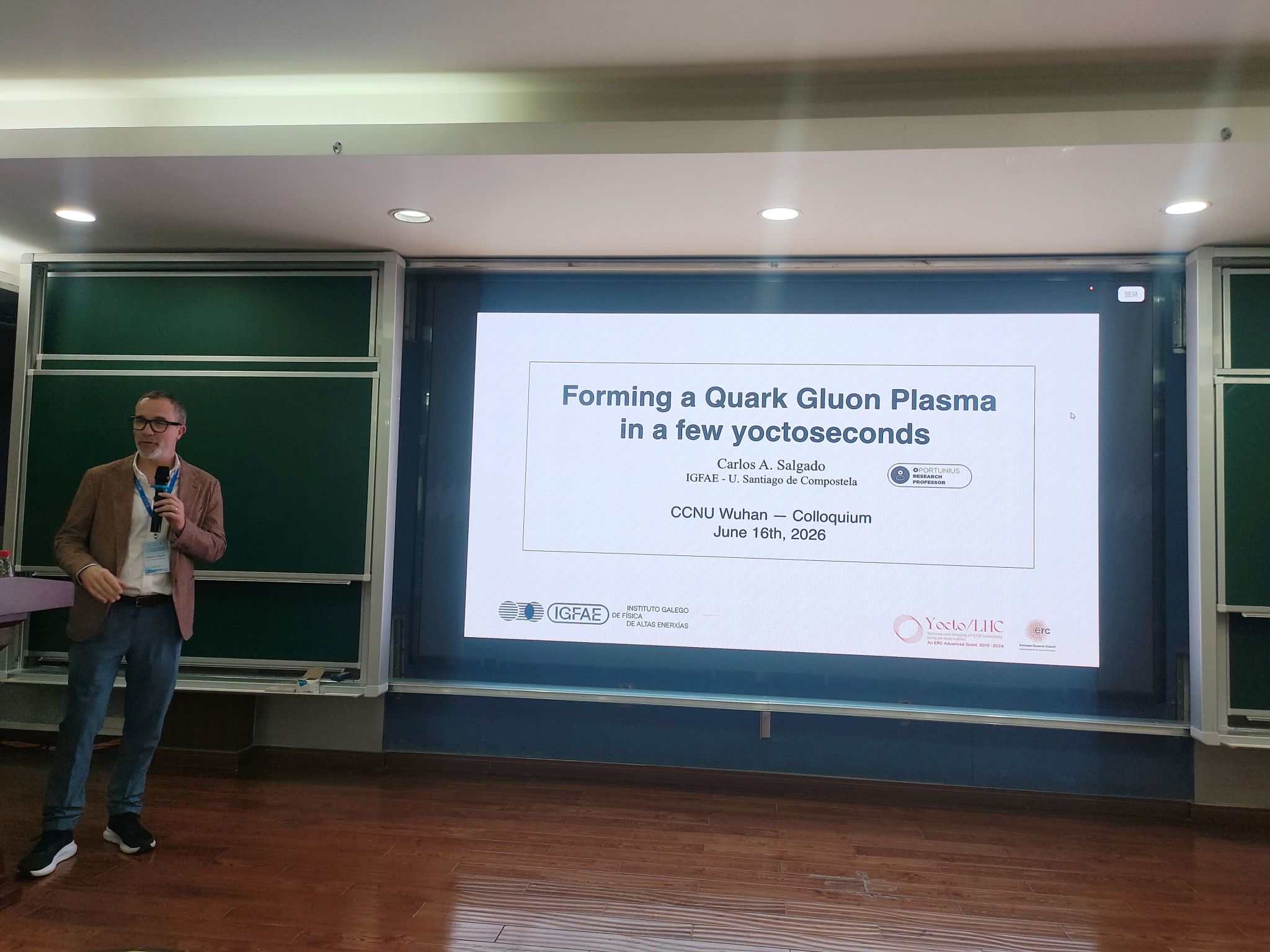
Professor Salgado approached the topic from the perspective of ultra-short spatiotemporal scales, explaining how a locally thermalized QCD medium—the Quark-Gluon Plasma—forms from a non-equilibrium system within just a few yoctoseconds (10-24 second)following lead-lead collisions at the Large Hadron Collider (LHC). He noted that experiments at CERN and Brookhaven National Laboratory over the past two decades have revealed this form of matter to possess the lowest viscosity among known substances and exhibit significant opacity to fast-moving colored particles. The talk reviewed the physical mechanisms governing the system's time evolution and the emergence of collective behavior, bridging complexity with clarity and sparking keen interest among the audience.
During the discussion session, Professor Salgado engaged in lively exchanges with faculty and students regarding the early-stage formation mechanisms of the QGP, the origin of collectivity, and future international collaboration directions with C3NT (Central China Center for Nuclear Theory). During the discussion session in the afternoon with early Ph.D. students at IOPP, Professor Salgado also looked back at his early years as a Ph.D. strudent, a postdoctoral fellow and a junior faculty and emphasized the important establishing international collaborations with his colleagues. His experience inspired the students at the discussion session.
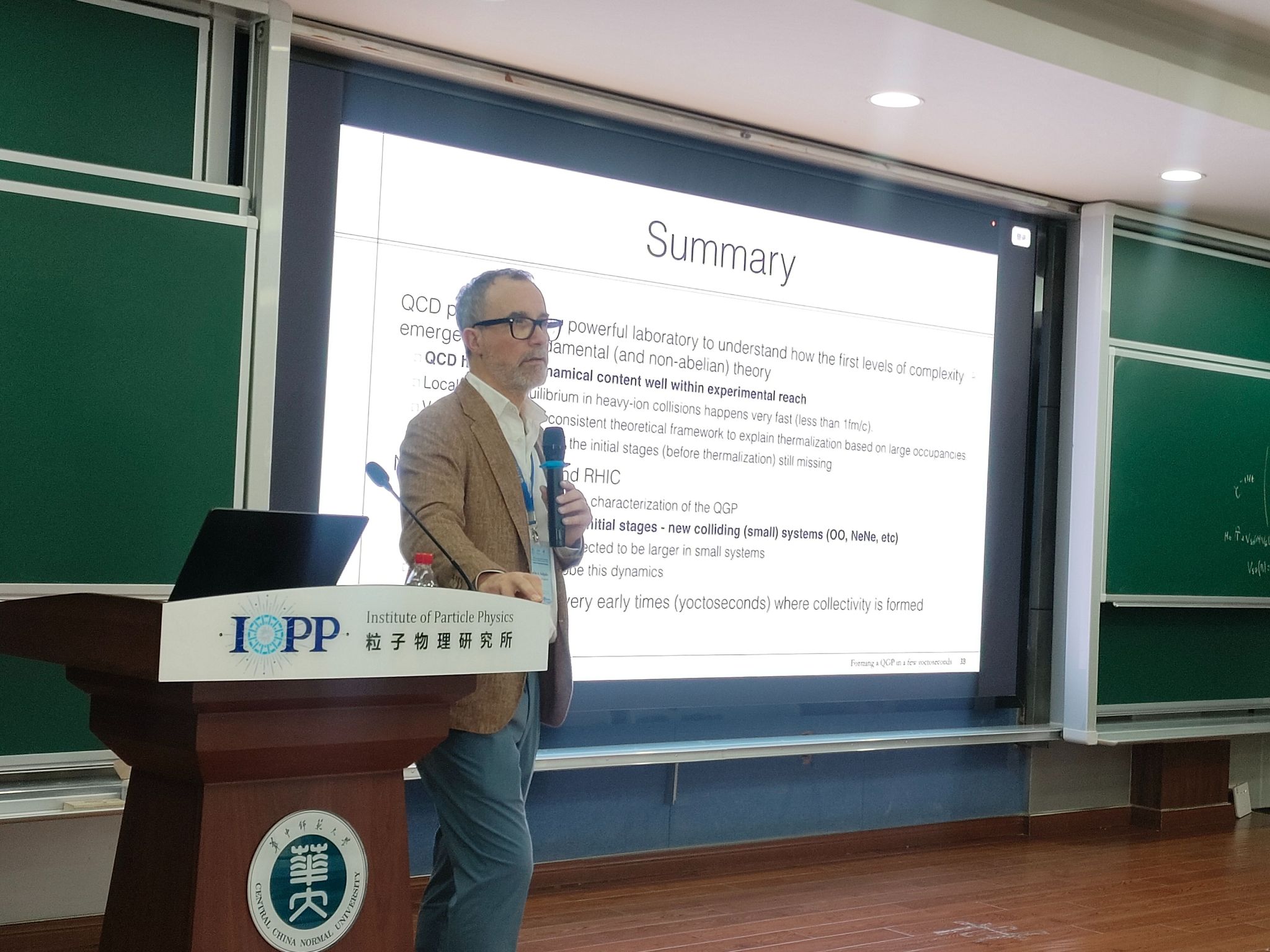
The IOPP Colloquium is a series of academic activities organized by the Institute of Particle Physics, aimed at fostering an open and collaborative academic ecosystem. This talk not only deepened the understanding of QCD matter properties under extreme conditions but also reinforced the IOPP's academic character of "international vision and interdisciplinary research," laying a solid foundation for future cooperative studies in heavy-ion collisions and nuclear theory.
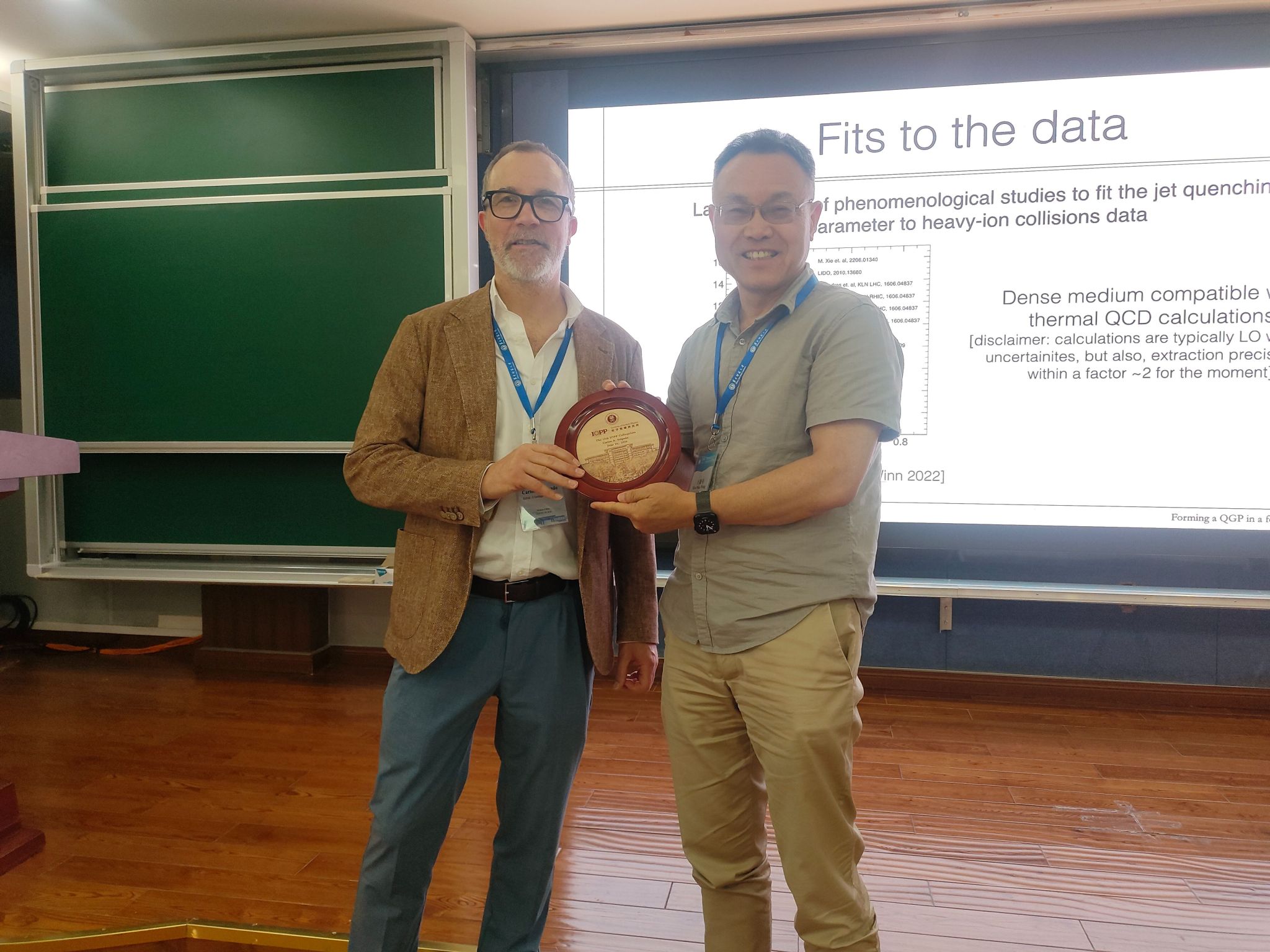
Professor Xin-Nian Wang, Director of C3NT and IOPP, presented Professor Carlos A. Salgado
with the 15th IOPP Colloquium Commemorative plaque
Carlos A. Salgado is Professor of Theoretical Physics at the Universidade de Santiago de Compostela and Oportunius Research Professor at IGFAE. He obtained his PhD in 1998 from the same university and held postdoctoral positions at Université Paris-Sud, CERN Theory Division (Marie Curie and CERN Fellowships) and Università di Roma La Sapienza. Back in Santiago since 2008, he has been awarded two ERC grants establishing a leading team in the field of theory and phenomenology of hot and dense QCD. His team has produced very influential contributions in the fields of parton distribution functions and jet quenching. During the last decade he has been director of IGFAE twice, an institute that holds twice the María de Maeztu distinction of Excellence, the highest recognition granted in Spain to a research centre.
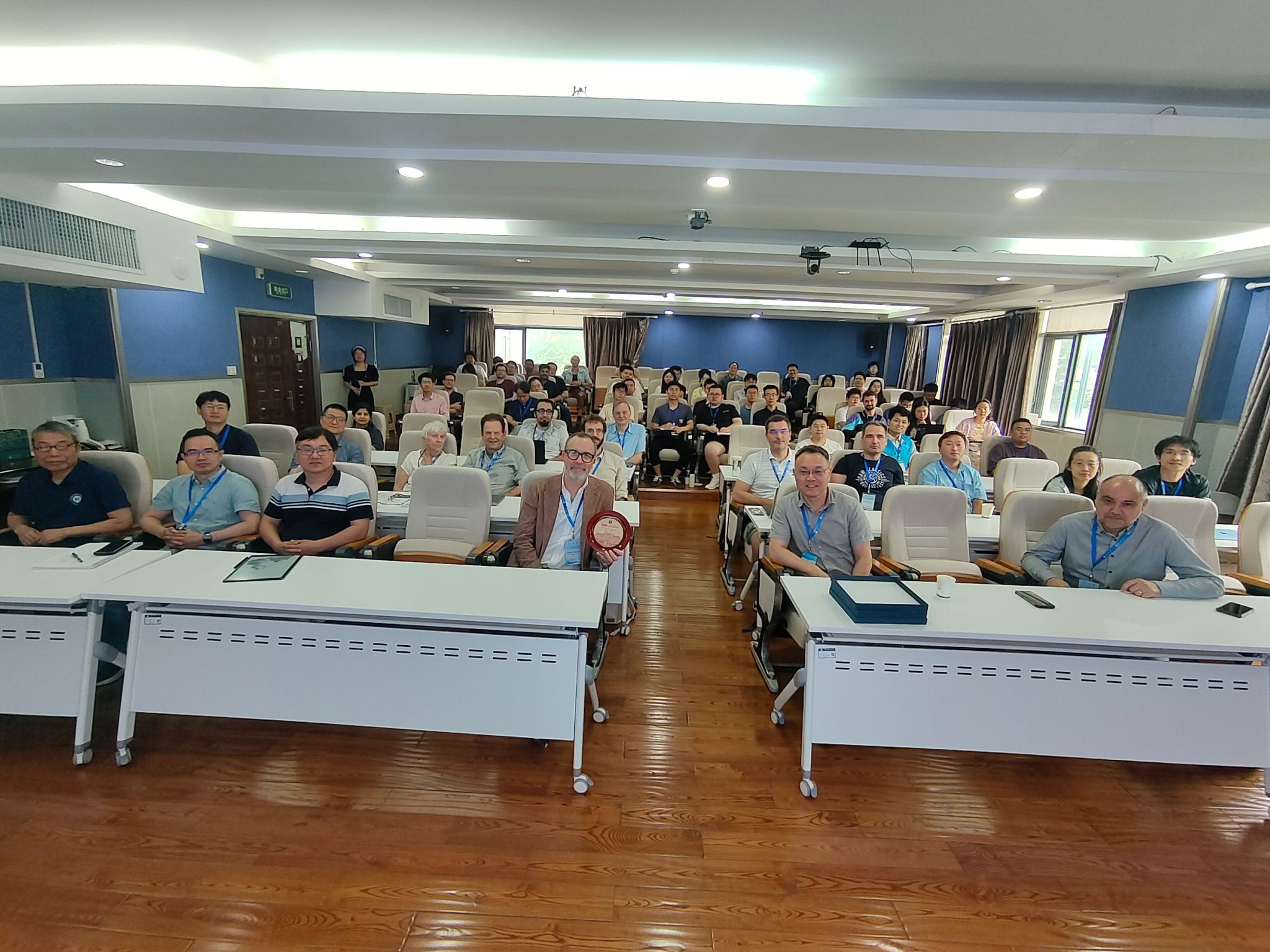
Group Photo of the 15th IOPP Colloquium
Correspondent: Xiangyu Shui
Proofreader: Wenyang Qian