The 8th IOPP Colloquium was held in the Institute of Particle Physics (IOPP) at Central China Normal University on March 17, 2026. Professor Fu-Rong Xu, a Boya Distinguished Professor at Peking University and recipient of the National Science Fund for Distinguished Young Scholars, deliver a talk on "Chiral Nuclear Forces and Ab Initio Calculations of Nuclear Structure." The colloquium was sponsored by the Institute of Particle Physics (IOPP) and the Central China Center for Nuclear Theory (C3NT).
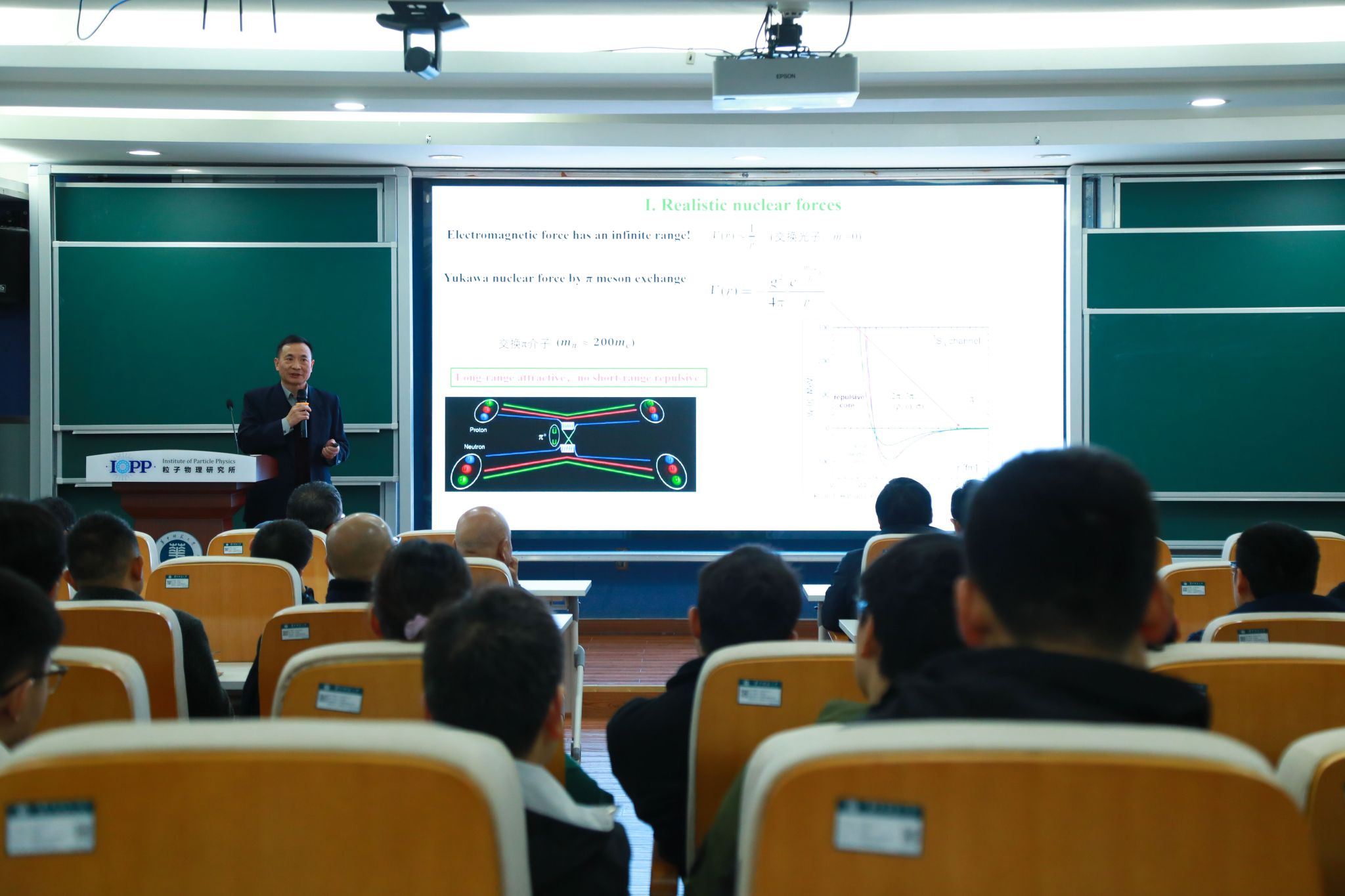
Professor Xu began his talk by reviewing the century-long development of nuclear structure theory, systematically explaining how realistic nuclear forces were constructed from chiral effective field theory (Chiral EFT) based on the fundamental symmetries of quantum chromodynamics (QCD). He pointed out that traditional real-energy stationary-state quantum mechanics struggles to describe weakly bound and unbound nuclear systems, whereas the complex-energy ab initio method developed by his team can self-consistently incorporate continuum coupling, enabling precise predictions of resonance energies and widths. This approach led to the first theoretical predictions of key nuclear systems such as the tetraneutron and oxygen-28, which were later experimentally confirmed.
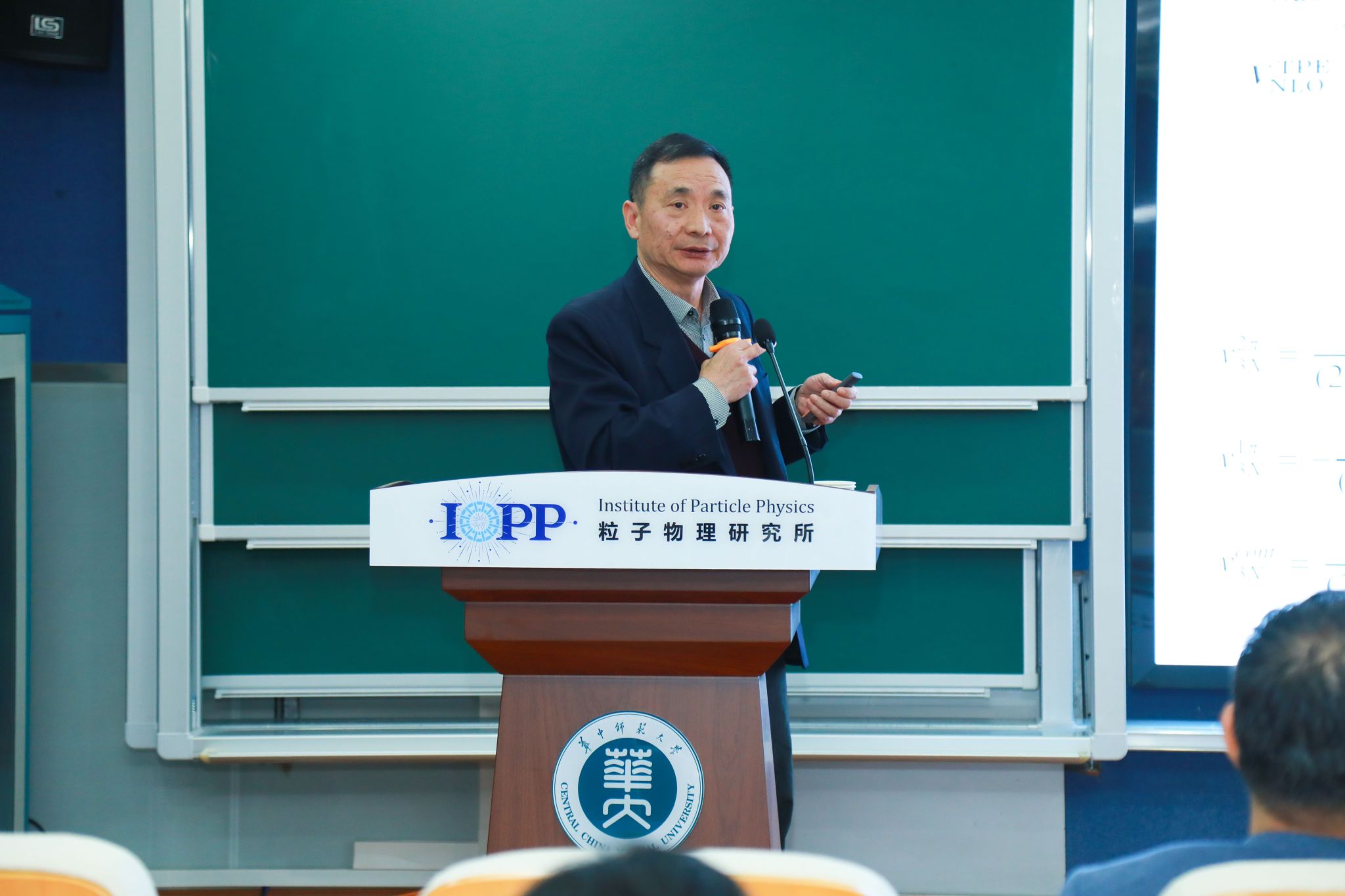
In his presentation, Professor Fu-Rong Xu systematically explained the framework of chiral effective field theory (Chiral EFT) nuclear forces based on QCD symmetries and the many-body methodology for first-principles calculations. He particularly highlighted his team's precise description of ²⁸O resonance parameters using Gamow-basis shell model. Through case studies including nucleon emission and resonance lifetime, Professor Xu provided an in-depth analysis of how the complex-energy methodology transcends the limitations of conventional stationary quantum mechanics, thereby establishing a new paradigm for drip-line nuclear research. These groundbreaking findings have been published in top-tier academic journals including Physical Review.
During the Q&A session, Professor Xu had in-depth discussions with PhD students on cutting-edge topics such as the role of three-nucleon forces in describing the isomer mechanism of ⁵³Co and the parameter scaling in Chiral EFT. He emphasized that advances in supercomputing have ushered in an era of precision prediction in ab initio calculations, while continuum effects remain key to understanding the structure of drip-line nuclei.
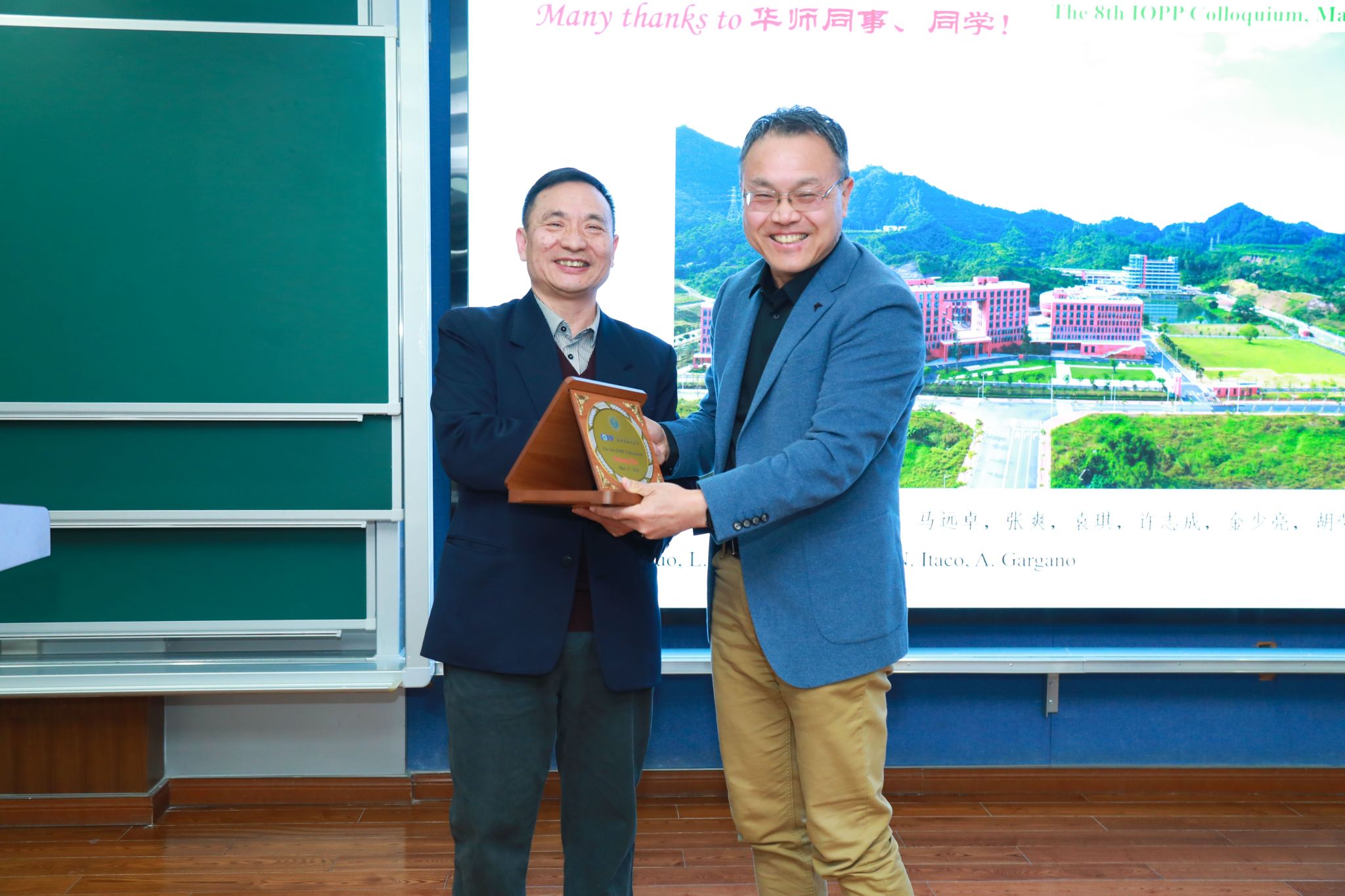
Professor Xin-Nian Wang, Director of C3NT and IOPP, presented Professor Fu-Rong Xu
with the 8th IOPP Colloquium Commemorative plaque
The IOPP Colloquium is a series of talks sponsored jointlyby the Institute of Particle Physics and Central China Center for Nuclear Theory, designed to offer popular yet inspiring letcures for all faculty and students. This lecture demonstrated the evolution of ab initio nuclear structure theory from phenomenological models to its foundations in QCD, providing a valuable learning opportunity for attendees and further strengthening the institute’s academic vision of "international perspective and interdisciplinary integration."
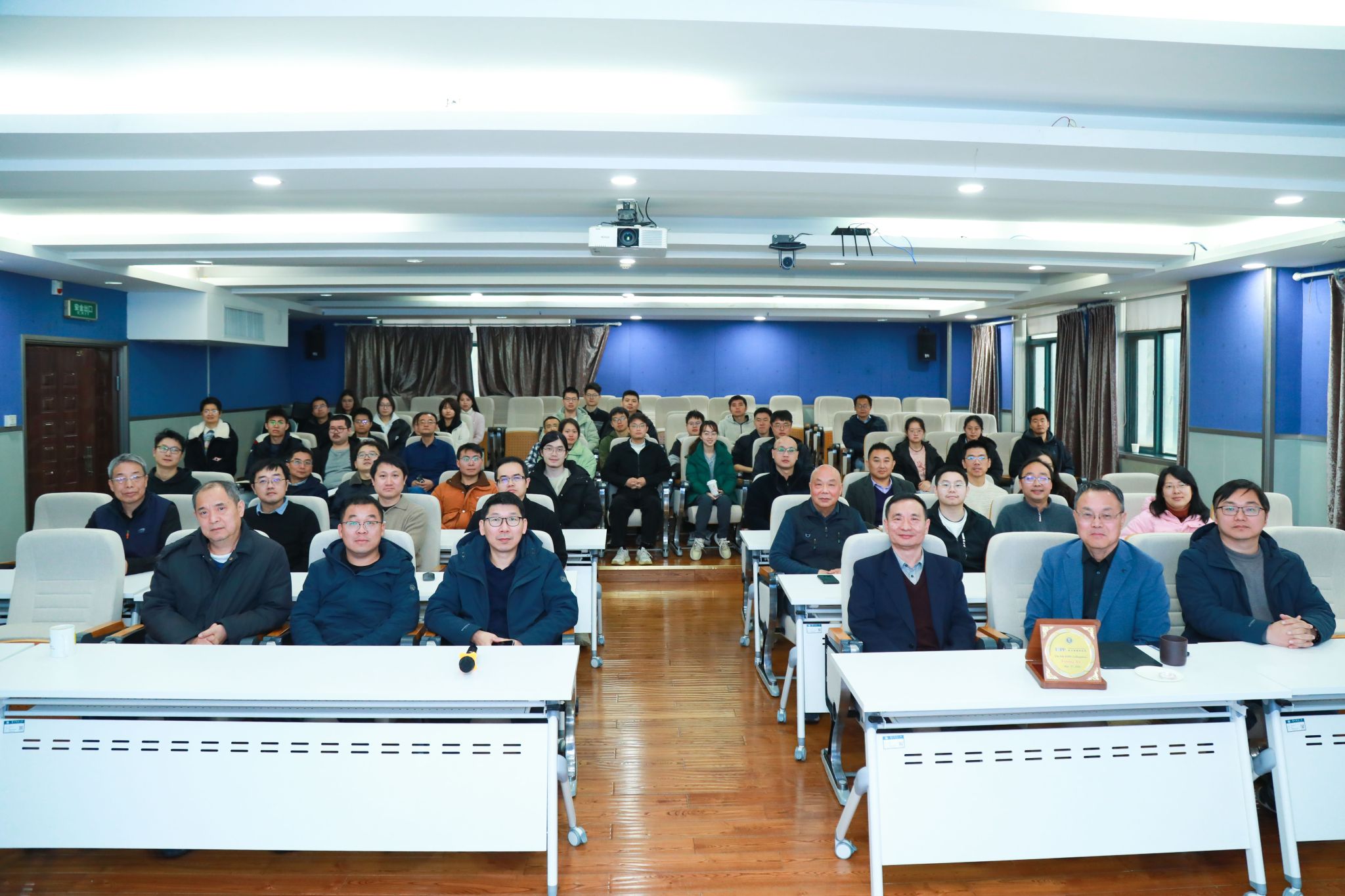
Group Photo of the 8th IOPP Colloquium
Speaker Profile:
Fu-Rong Xu is a Boya Distinguished Professor at Peking University. He received the National Science Fund for Distinguished Young Scholars of China and the State Council Special Government Allowance. From 1980 to 1993, he obtained his B.Sc., M.Sc., and Ph.D. degrees from Peking University, followed by postdoctoral research in Sweden and the United Kingdom from 1995 to 2000. He currently serves as Vice Chairman of the Chinese Nuclear Physics Society, Director of the Southern Center for Nuclear Theory, Executive Director of the China–US Joint Institute for Theoretical Studies of Exotic Nuclei (CUSTIPEN), Council Member of the Asia-Pacific Nuclear Physics Association, Visiting Professor at the University of Surrey (UK), and editorial board member of Physical Review C, Journal of Physics G, Science Bulletin, Communications in Theoretical Physics, and Nuclear Science and Technology.
He previously served as long-term Chair of the Department of Technical Physics at Peking University, Deputy Director of the State Key Laboratory of Nuclear Physics and Nuclear Technology, Associate Editor-in-Chief of Chinese Science Bulletin, Deputy Chair of the Teaching Advisory Committee on Nuclear Engineering and Nuclear Technology under the Ministry of Education, member of the Academic Leadership Group for Theoretical Physics Grants of NSFC, member of the Academic Committee and the Teaching Committee of the School of Physics at Peking University. He is a recipient of the Wu Youxun Prize of the Chinese Physical Society and the First Prize of Natural Sciences awarded by the Ministry of Education.
Professor Xu has long been engaged in theoretical nuclear physics research, having led five consecutive key projects funded by the National Natural Science Foundation of China. He established the first domestic research team dedicated to ab initio nuclear structure calculations.
Correspondent: Xiangyu Shui
Proofreader: Xin-Nian Wang