The 14th IOPP Colloquium was held at the Lecture Hall 9409 of the Institute of Particle Physics (IOPP), Central China Normal University on the morning of June 2, 2026. Professor Xiangdong Ji from the Tsung-Dao Lee Institute at Shanghai Jiao Tong University delivered a talk titled "Origin of Energy and Proton Structure." The lecture hall was filled to capacity, attracting over one hundred faculty members and students.
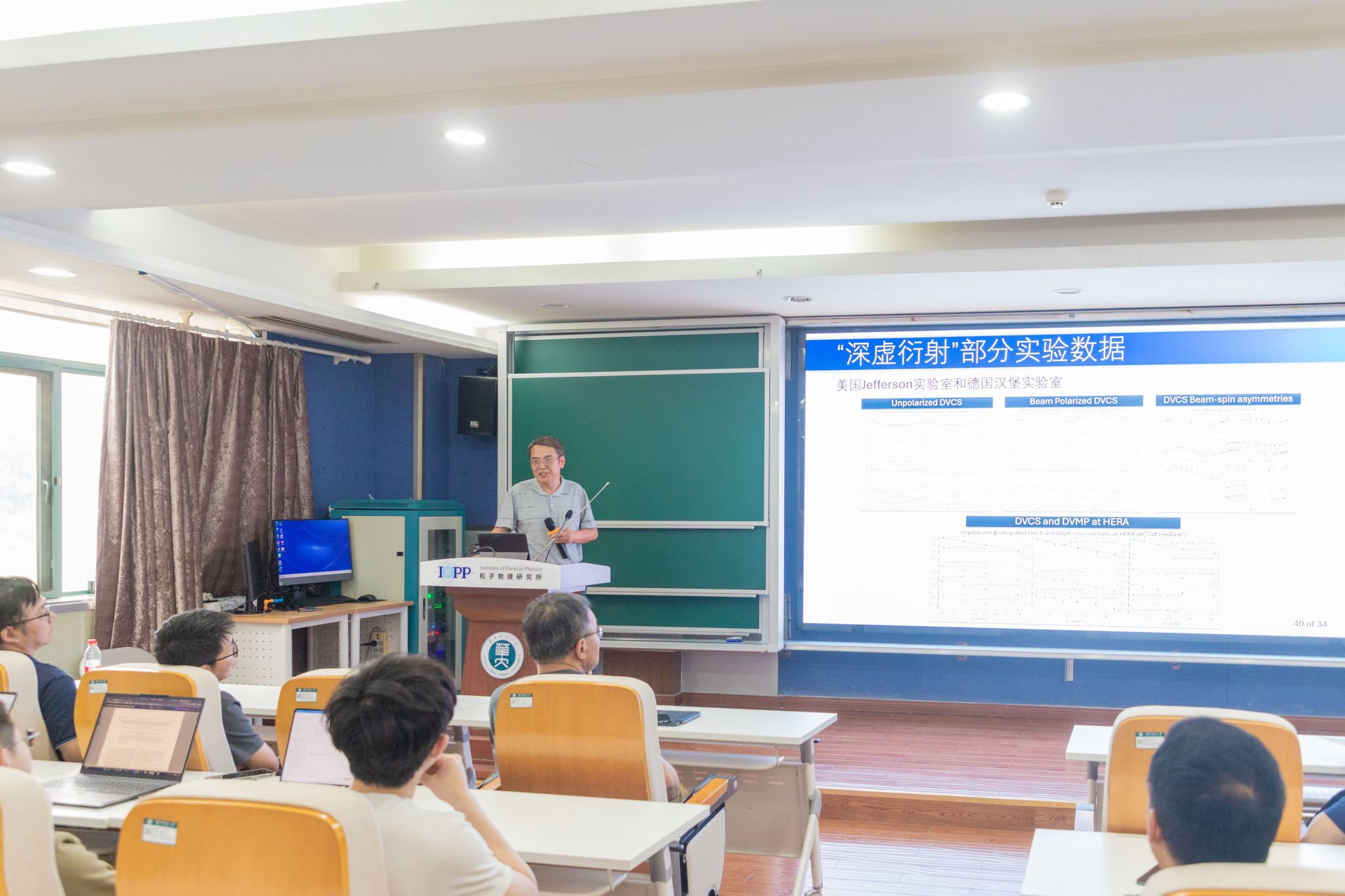
Professor Ji approached the topic from the perspective of cosmic evolution, pointing out that the energy from the Big Bang is preserved within protons and neutrons through the confinement mechanism of the strong interaction, serving as the source of energy for stellar evolution and the Sun. He emphasized that understanding the confinement mechanism and energy structure of nucleons requires the quark-gluon picture in Quantum Chromodynamics, combined with tools such as Generalized Parton Distributions (GPDs) and Deeply Virtual Exclusive Scattering, relying on the next-generation Electron-Ion Collider (EIC) in China and the US for further research. Bridging cosmology and particle physics, the talk was both profound and accessible, sparking great interest among the audience. During the discussion session, Professor Ji engaged in lively exchanges with faculty and students on topics ranging from nucleon 3D imaging to potential collaborations with C3NT (Central China Center for Nuclear Theory).
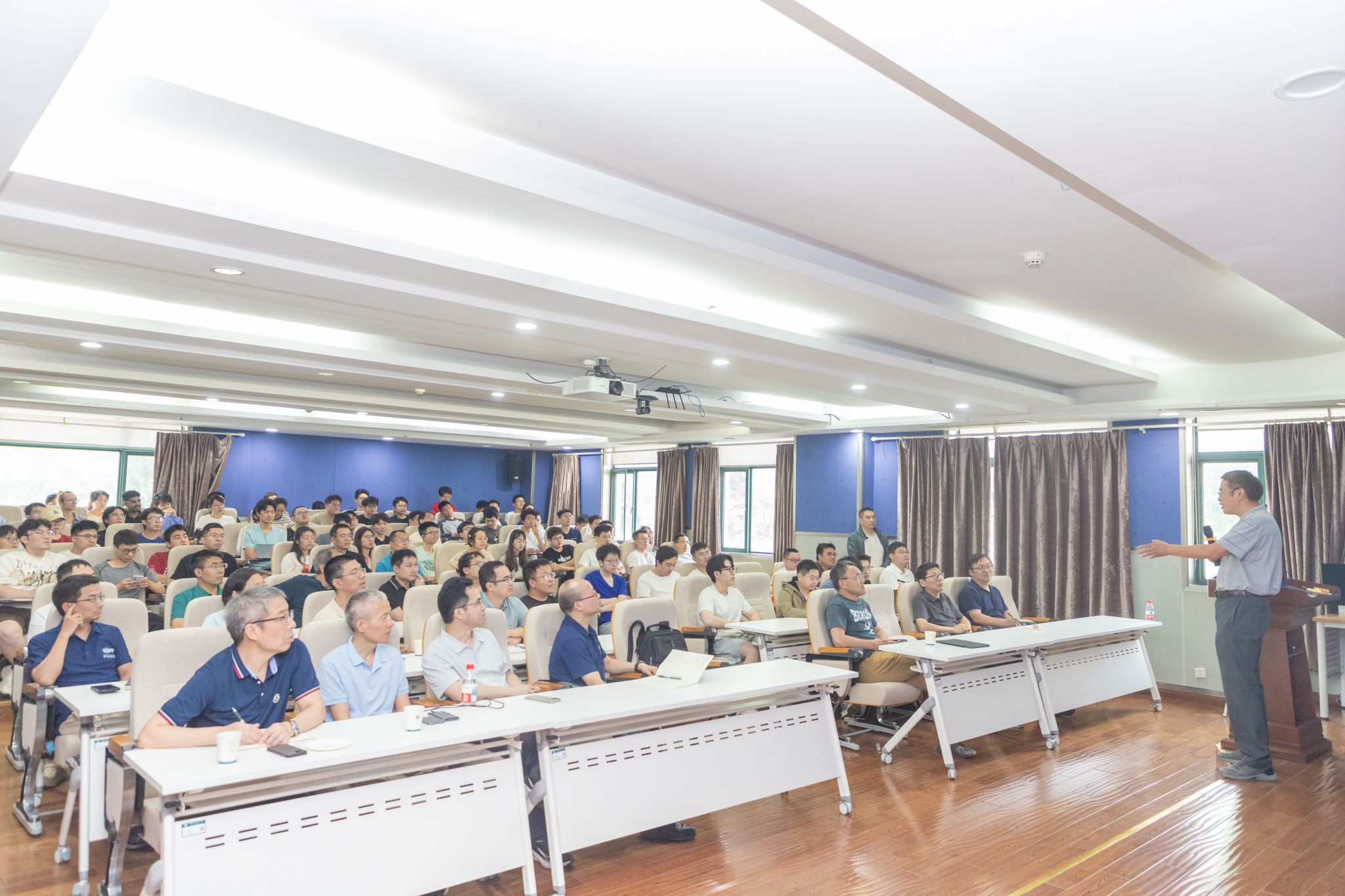
The IOPP Colloquium is a series of academic activities organized by the Institute of Particle Physics, aimed at fostering an open and collaborative academic ecosystem. This talk deepened the understanding of the fundamental issue of nucleon structure and further reinforced the IOPP's academic character of "international vision and interdisciplinary research."
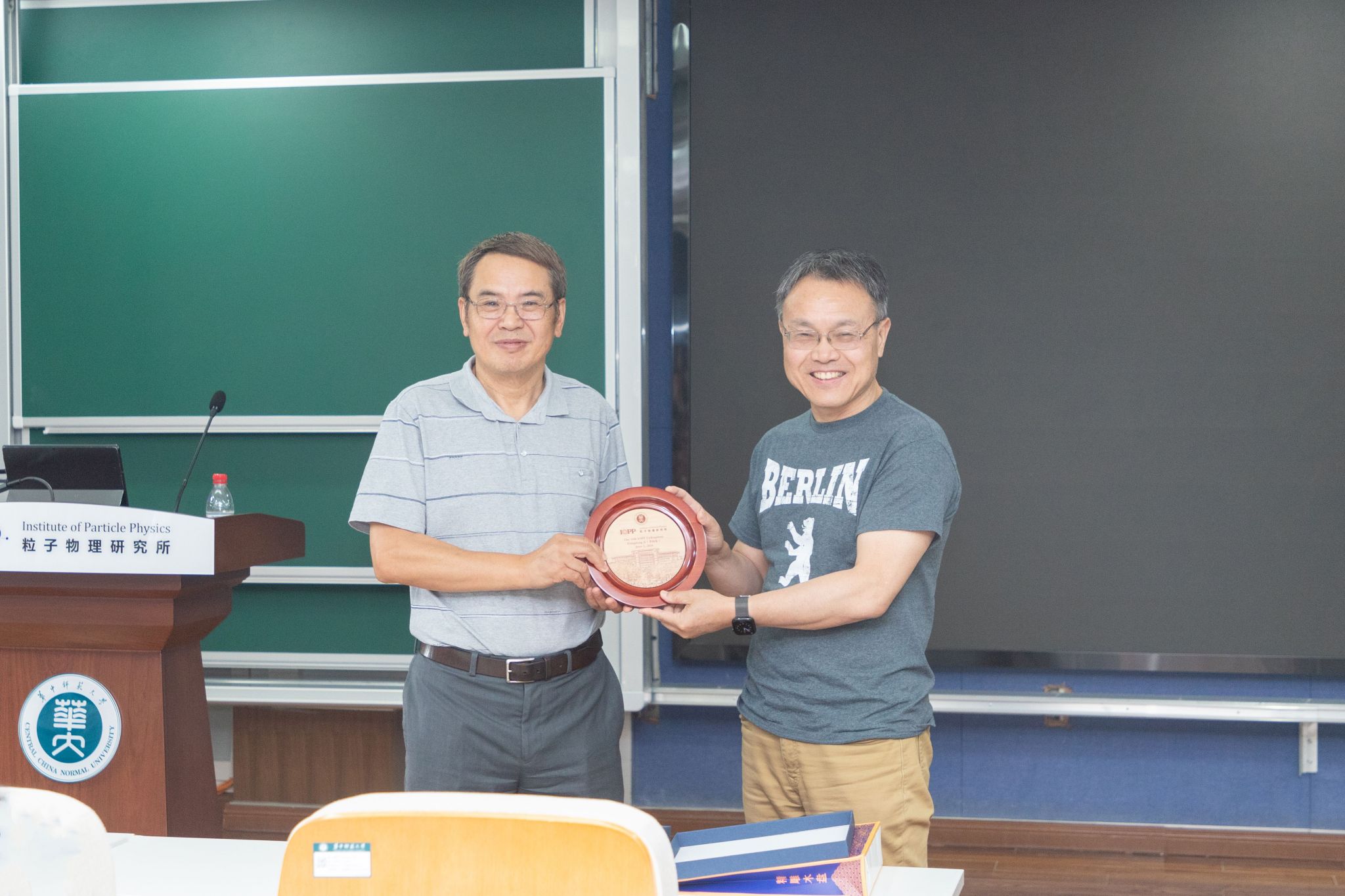
Professor Xin-Nian Wang, Director of C3NT and IOPP, presented Professor Xiangdong Ji
with the 14th IOPP Colloquium Commemorative plaque
Xiangdong Ji, Hong Wen Chair Professor at T.D. Lee Institute, Shanghai Jiao Tong University. He received his Ph.D. from Drexel University in 1987. He has held various research and teaching positions at Caltech, MIT, and the University of Maryland, where he was a Distinguished University Professor. His main research area includes quantum chromodynamics and nucleon structure. He proposed generalized parton distributions as a tool to describe the 3D structure of the nucleon and to study the spin, energy, and force densities inside. He found a new class of high-energy scattering, deeply virtual exclusive processes including Deeply Virtual Compton Scattering (DVCS), to image the nucleon structure, which has become an important part of the physics program at the Electron-Ion Collider.
He is the founder of the PandaX collaboration, which uses liquid xenon detectors for dark matter detection and studies of neutrinos.
Awards and recognitions: APS Fellow, Humboldt Research Prize, Outstanding Nuclear Physicist Award from JSA, First Prizes from MOE, APS Herman Feshbach Prize, Ruiyan Science and Technology Award from Shanghai Jiao Tong University.
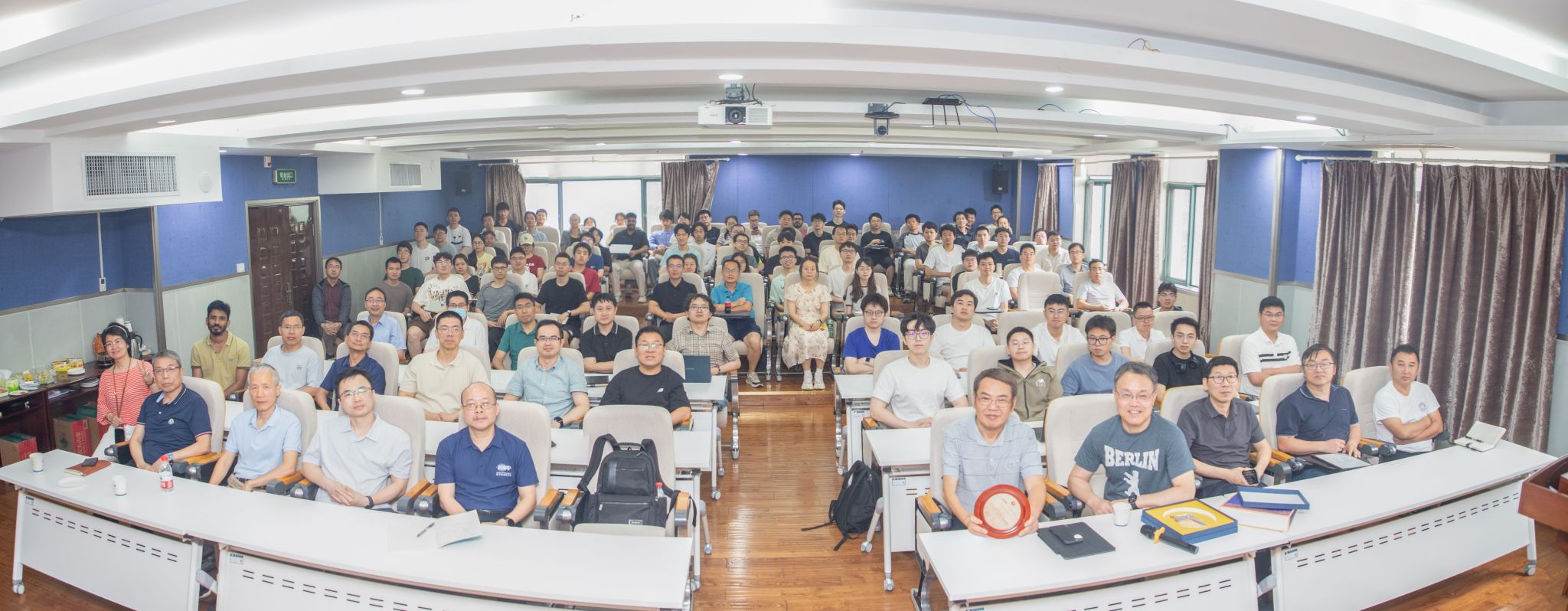
Group Photo of the 14th IOPP Colloquium
Correspondent: Xiangyu Shui
Proofreader: Xin-Nian Wang
Photographer: Tong Han