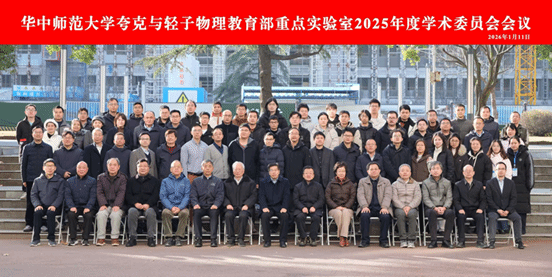
On January 11, 2026, the 2025 Academic Committee Meeting of the Key Laboratory of Quark and Lepton Physics (Ministry of Education) was held at Central China Normal University.
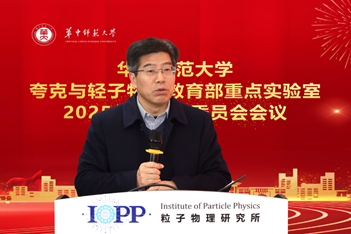
President Peng Shuangjie attended the meeting and delivered a welcome speech. On behalf of the university, he expressed sincere gratitude to the committee members for their contributions to the laboratory's development and offered valuable guidance. He emphasized that the university will further increase investment, providing stronger support in platform construction, talent development, and resource allocation to foster the laboratory's growth. President Peng expressed hope that, under the guidance of experts, the laboratory will become an internationally renowned research base in quark matter studies, cultivate a group of high-level talents urgently needed by the country, and make positive contributions to China's basic science and education endeavors.
The meeting was chaired by Academician Zhao Zhengguo from the University of Science and Technology of China, who serves as the director of the laboratory's academic committee, and Professor Ding Hengtong, the laboratory's deputy director.
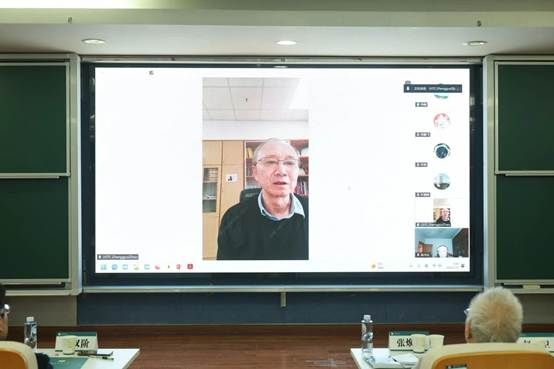
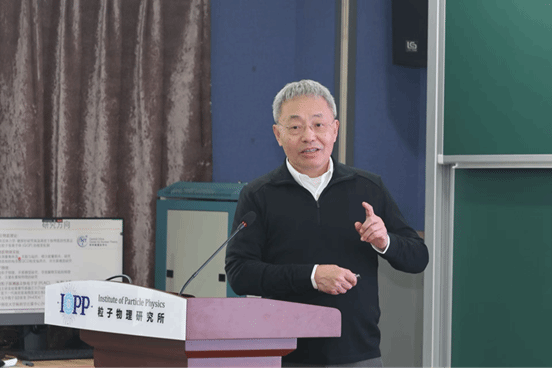
Professor Xu Nu, director of the key laboratory, reported on the major progress achieved in 2025 and future development plans. Professors Ke Weiyao, Wang Xiangpeng, Shi Shusu, and Wang Yaping presented progress reports on behalf of five research directions: quark matter physics theory, particle physics and phenomenology, high-energy heavy-ion collision experiments, particle detection technology, and the Nuclear Science Computing Center.
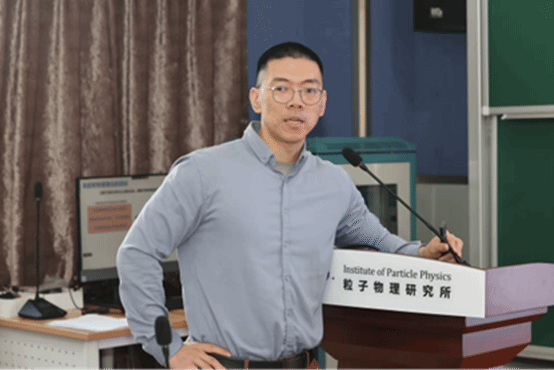
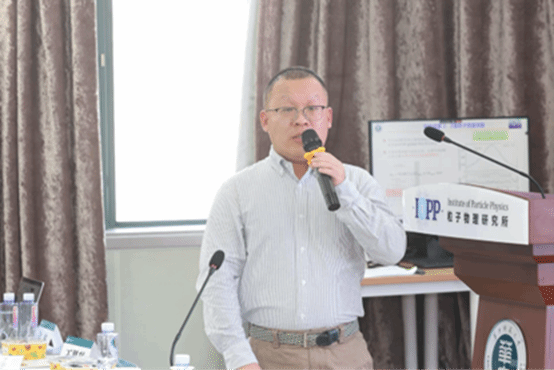
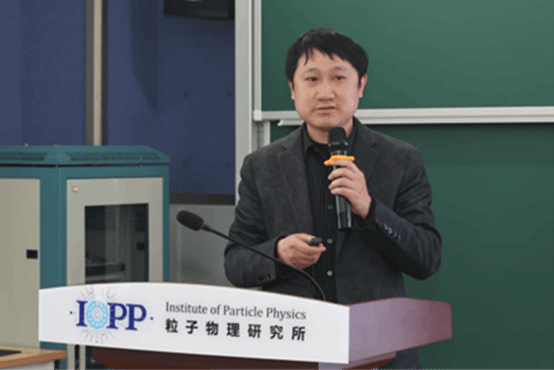
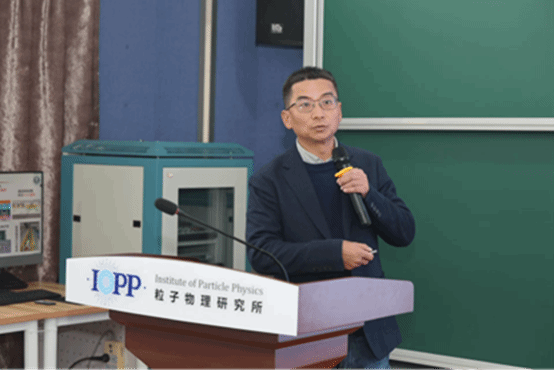
The academic committee members fully acknowledged the laboratory's progress in 2025 in disciplinary development, scientific research, talent cultivation, and the recruitment of outstanding researchers. They unanimously agreed that the laboratory has demonstrated strong overall development in quark matter theory, the Nuclear Science Computing Center, high-energy heavy-ion experiments, particle physics theory and experiments, as well as domestic and international collaborations in particle detector and fast electronics technology. In 2025, the laboratory published over 116 SCI papers, including eight articles in Physical Review Letters, and recruited six young researchers. The development of silicon pixel and fast electronics technology and its application in particle detection have advanced rapidly, keeping pace with international frontiers and undertaking major scientific research projects. Since its operation, the Nuclear Science Computing Center has yielded significant results and shows promising development trends. The laboratory's international reputation continues to grow, and its talent pool is steadily expanding.
Regarding the laboratory's future development, the committee members put forward the following suggestions:
Align the research layout more closely with national needs, gradually shifting from reliance on international collaboration to leveraging domestic large-scale scientific facilities and major national projects.
Focus on key technologies such as detectors, electronics, and computing (particularly radiation resistance and high-precision measurement), strengthen the development of the Nuclear Science Computing Center and the Silicon Pixel Laboratory as two major supporting platforms, improve the technical support team, and implement the development plan for the Nuclear Science Computing Center.
Enhance collaboration between theory and experiment, organize joint efforts to address major scientific issues, continuously refine questions from instrument usage and scientific engineering practices, and establish a closed-loop mechanism of "scientific problem-driven research—technological optimization—results dissemination."
Seek resource support through multiple channels, incorporate the laboratory's construction and development goals into the planning of the new campus, and coordinate efforts in spatial layout and resource allocation.